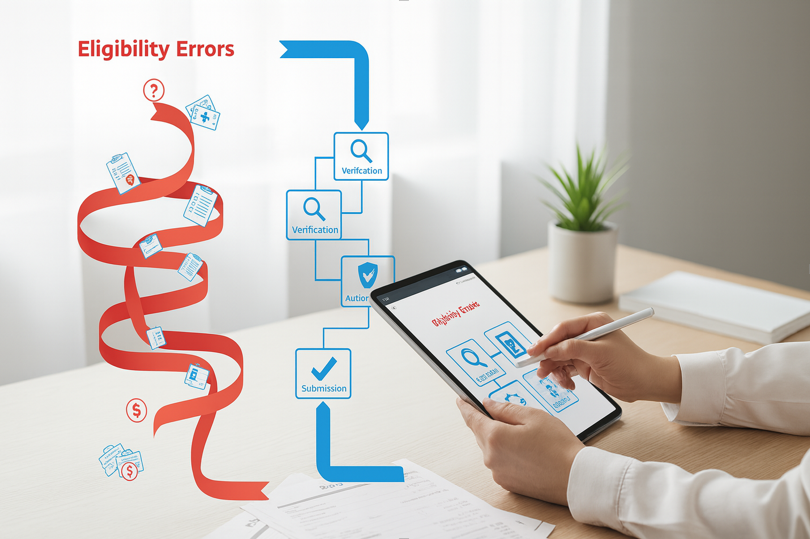
Why Eligibility Errors Keep Happening in ABA Billing and the Workflow That Stops Them
Eligibility errors are one of the biggest reasons ABA providers lose money without realizing it. Even when your intake team works hard, something small like a missed update, outdated insurance detail, or incomplete documentation can trigger problems that follow you for months. And the thing with ABA billing is that it doesn’t forgive manual mistakes. The moment eligibility slips, everything else becomes a mess, from credentialing checks to claim insurance submission and denial management.
This is why every clinic, whether small or growing, ends up searching for a smoother RCM process that protects their cash flow. And honestly, once you understand why eligibility issues keep coming back, it becomes easier to build a workflow that actually stops them.
Why Eligibility Issues Keep Repeating in ABA Billing
1. Insurance Rules Change Without Warning
Insurance plans update benefits, requirements, and policies more often than most practices expect. When your team doesn’t track these changes, eligibility errors become unavoidable. Even the strongest documentation system can fail if insurance benefits changed last week and nobody noticed.
This is where experienced teams and trustworthy support systems like an aba billing service help catch updates before they turn into bigger problems.
2. Credentialing Gaps Trigger Rejections
Providers assume that once credentialing is done, they’re set. But payers frequently require updates, revalidations, or new paperwork based on plan type. When credentialing data doesn’t match payer files, eligibility checks go sideways.
This is also the reason many clinics now lean on an ABA therapy billing service that keeps credentialing aligned with RCM standards.
3. Missing or Incomplete Documentation
Eligibility scrubs depend heavily on complete documentation. If intake notes, coverage details, plan limits, or diagnosis codes are missing, every claim insurance submission is at risk. Many ABA teams underestimate how many denials come from simple documentation gaps that were avoidable from the beginning.
4. Verifications Done Too Late
Many clinics verify eligibility only at intake. But ABA therapy is long-term, and benefits can change monthly. Delayed checks lead to rejected claims, frustrated parents, and large outstanding balances. A proactive workflow connected with a solid ABA therapy billing service prevents this cycle.
5. Plan Types Are More Complex Than They Look
HMO, PPO, EPO, Medicaid, employer-based plans—each one brings different rules for documentation, authorization, RCM steps, and credentialing requirements. Without detailed verification, the clinic ends up sending claim insurance files that don’t match the plan’s guidelines, which leads to eligibility-related denials.
The Eligibility Verification Workflow That Prevents Claim Denials
Eligibility errors don’t stop on their own. They only stop when your clinic builds a simple, repeatable workflow that your team can follow every single time.
Below is a workflow ABA clinics use to keep their claim insurance clean and reduce denial management headaches.
1. Pre-Check Before Intake
Before scheduling an assessment, have your team verify:
- Active coverage
- Member ID accuracy
- Copay, deductible, and out-of-pocket limits
- Plan exclusions
- ABA-specific benefits
- Referral and authorization requirements
This pre-check alone reduces more than 40% of early claim insurance denials.
2. Use a Two-Step Verification
One verification is never enough in ABA billing.
Use a two-step approach:
- Step 1: At intake
- Step 2: 48–72 hours before the first session
This ensures benefits didn’t change in between, which happens more often than teams realize.
3. Sync Eligibility Checks With Documentation
Your documentation workflow should match your eligibility workflow. Meaning:
- Authorization letters
- Assessment dates
- Diagnosis codes
- Provider details
- Session schedules
All need to connect smoothly with the eligibility confirmation. When documentation is aligned, claim insurance files move through RCM faster and cleaner.
4. Keep Credentialing Updated
Credentialing is not a one-time task.
Schedule updates every:
- 90 days for commercial payers
- 6 months for Medicaid
- Annually for group contracts
Most practices don’t do this leading to eligibility confusion that gets blamed on billing when the real issue was credentialing.
This is another area where clinics rely on a dedicated ABA therapy billing service to keep everything updated.
5. Automate the Parts That Cause Delays
Automation doesn’t have to replace your team. It helps them catch what they don’t have time to track manually.
For example:
- Auto-reminders for re-verification
- Alerts for expired benefits
- Updates on documentation gaps
- Instant notifications for authorization expirations
This reduces the load on your front desk and strengthens the entire RCM cycle.
6. Track Denials to Prevent Them
Every claim insurance denial teaches you something.
If your denial management team tracks the patterns, you’ll catch repeating eligibility problems early:
- Wrong plan type
- Benefit mismatch
- Expired authorization
- Incorrect provider credentialing
- Missing documentation
This tracking process builds a loop that strengthens your entire RCM system.
See also: What Are the Challenges of Retrofitting Old Jetties to Modern Standards?
How an External Billing Partner Helps Close the Gaps
Sometimes the problem isn’t your team it’s the volume of work. Even clinics with great staff struggle to balance documentation, RCM, credentialing, and claim insurance follow-ups.
This is why many practices choose to partner with a full-service ABA billing team.
A skilled aba billing service manages eligibility checks daily, aligns documentation, watches coverage changes, and handles claim insurance submissions immediately.
Meanwhile, an expert ABA therapy billing service strengthens your RCM and keeps you ahead of denials and compliance rules.
When both sides your team and the billing partner work together, eligibility errors drop dramatically.
Final Thoughts
Eligibility errors aren’t random. They follow patterns.
And once you understand those patterns insurance changes, documentation issues, credentialing mismatches, and late verifications you can build a workflow that finally stops them.
If you want a deeper breakdown of why these issues happen across different plans, you can explore eligibility verification challenges explained for a detailed look.